
Introduction
Blockchain technology has moved far beyond cryptocurrency. Businesses across fintech, healthcare, supply chain, gaming, real estate, and other industries are investing in blockchain to improve transparency, automate processes, strengthen security, and create new digital business models.
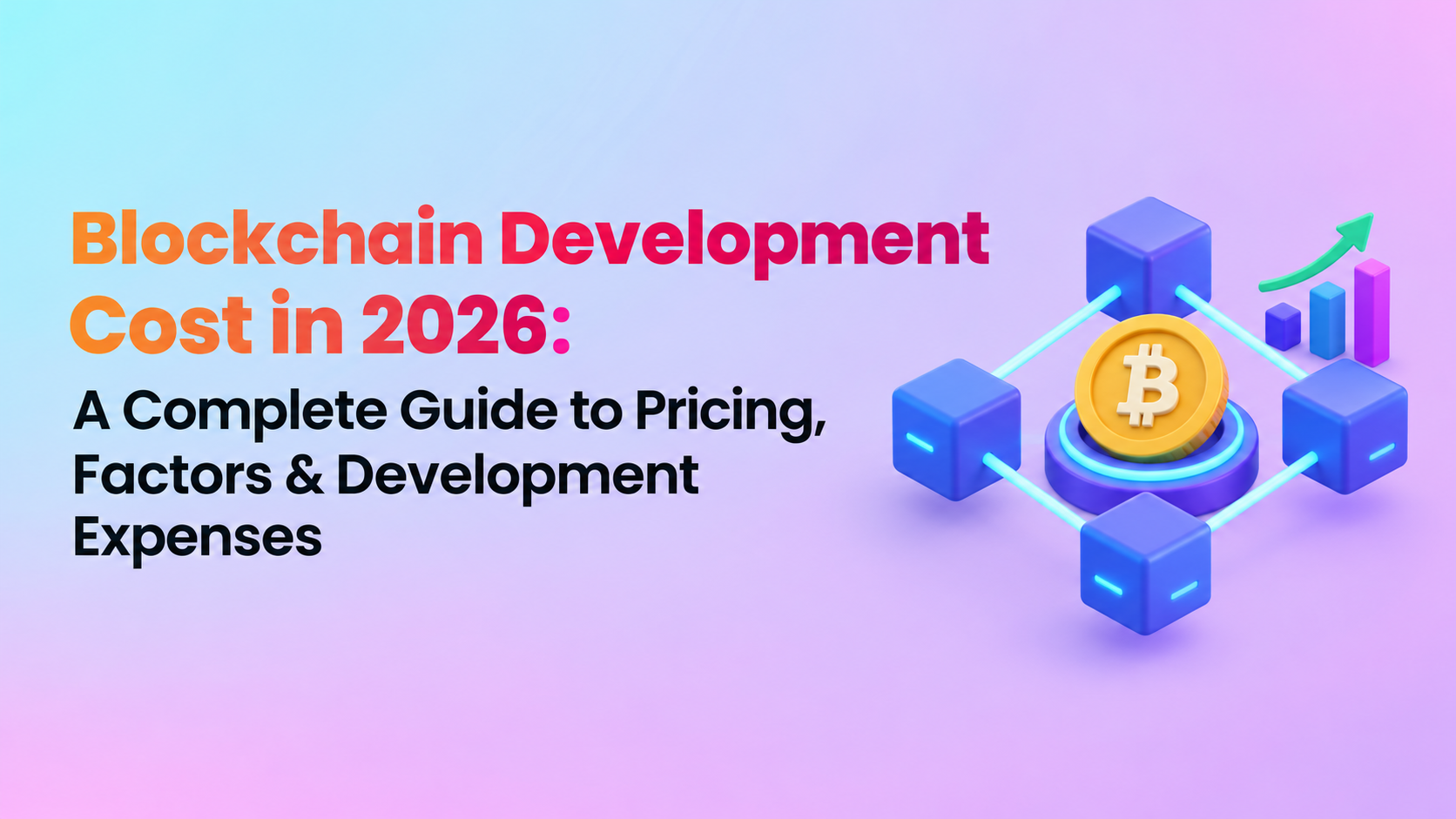
One of the first questions companies ask before starting a blockchain project is: How much does blockchain development cost in 2026?
The answer depends on several factors, including the type of blockchain solution, project complexity, features, technology stack, development team, security requirements, and integrations.
In 2026, the average blockchain development cost can range from $15,000 for a relatively simple blockchain application to $250,000+ for a highly complex enterprise-grade platform. Large-scale blockchain ecosystems involving custom networks, advanced smart contracts, wallets, exchanges, or extensive integrations can cost significantly more.
This guide explains the major factors affecting blockchain development costs, typical price ranges, development timelines, and how businesses can plan their blockchain investment effectively.
How Much Does Blockchain Development Cost in 2026?
There is no single fixed price for blockchain development because every project has different technical and business requirements.
Here is a general estimate:
| Blockchain Project Type | Estimated Development Cost |
| Basic Smart Contract | $3,000 – $10,000 |
| DApp Development | $15,000 – $60,000 |
| NFT Marketplace | $20,000 – $80,000 |
| Crypto Wallet | $20,000 – $100,000+ |
| DeFi Platform | $40,000 – $150,000+ |
| Blockchain Exchange | $50,000 – $200,000+ |
| Custom Blockchain Network | $80,000 – $250,000+ |
| Enterprise Blockchain Solution | $100,000 – $500,000+ |
These figures are indicative rather than fixed quotations. The actual blockchain development cost depends on the scope, architecture, features, security requirements, integrations, and development team selected.
What Determines Blockchain Development Cost?
Several factors influence the total cost of building a blockchain solution.
1. Type of Blockchain Project
The type of product you want to build is one of the biggest cost drivers.
A basic smart contract requires considerably less development work than a complete DeFi ecosystem or custom blockchain network.
For example, a project may involve:
- Smart contract development
- DApp development
- NFT marketplace development
- Crypto wallet development
- DeFi platform development
- Blockchain exchange development
- Token development
- Private blockchain development
- Enterprise blockchain development
Before estimating the budget, businesses should clearly define the product, its users, core features, and expected functionality.
2. Blockchain Platform
The blockchain network selected for development can affect both development complexity and ongoing costs.
Popular options include Ethereum, Polygon, BNB Chain, Solana, Avalanche, Arbitrum, Base, and other EVM-compatible or non-EVM networks.
Each platform has different capabilities, programming environments, transaction models, scalability characteristics, and ecosystem tools.
If your application needs to operate across multiple networks, development costs can increase because the team may need to build and test additional integrations
3. Project Complexity
Complexity has a direct impact on blockchain development pricing.
A basic application with a few smart-contract functions may require a relatively small development team. An enterprise blockchain platform with multiple user roles, sophisticated business logic, APIs, analytics, payment integrations, and administrative tools requires substantially more engineering work.
Projects are generally classified as:
Basic: Limited functionality and straightforward smart contracts.
Medium: Multiple user roles, integrations, custom business logic, and more sophisticated contracts.
Complex: Advanced smart contracts, multiple integrations, high scalability requirements, cross-chain functionality, extensive security testing, and custom infrastructure.
The more components your product contains, the greater the development effort.
Blockchain Development Cost by Project Type
Smart Contract Development Cost
Smart contracts automate transactions and business logic on blockchain networks.
A simple smart contract may cost around $3,000–$10,000, while complex contracts involving sophisticated tokenomics, financial mechanisms, governance, or multiple contracts can cost considerably more.
Cost typically depends on:
- Number of contracts
- Contract complexity
- Tokenomics
- External integrations
- Testing requirements
- Security audits
- Deployment requirements
Because smart contracts can control valuable digital assets, security testing should be treated as an essential part of the budget rather than an optional expense.
DApp Development Cost
A decentralized application combines blockchain-based logic with a user-facing application.
A basic DApp can cost approximately $15,000–$60,000, while sophisticated applications can exceed this range.
DApp development may include:
- Frontend development
- Smart contract development
- Wallet connectivity
- Backend or off-chain services
- Blockchain integration
- User authentication
- Admin dashboard
- API integration
- Testing and deployment
NFT Marketplace Development Cost
NFT marketplaces require more than simply creating NFTs.
A marketplace may include:
- NFT minting
- Buying and selling
- Auctions
- Royalty mechanisms
- User profiles
- Crypto wallet integration
- Search and filtering
- Collections
- Admin management
- Smart contracts
A typical NFT marketplace project may cost $20,000–$80,000+, depending on functionality and design requirements.
Crypto Wallet Development Cost
Crypto wallet development can range from $20,000 to $100,000+.
A basic wallet supporting a limited number of networks and assets is less expensive than a multi-chain wallet with advanced security and Web3 functionality.
Potential features include:
- Multi-chain support
- Token management
- Transaction history
- WalletConnect integration
- Hardware wallet compatibility
- Biometric authentication
- NFT support
- DApp connectivity
- Security monitoring
DeFi Development Cost
DeFi applications typically require significant security and engineering expertise.
Depending on the product, a DeFi platform may include:
- Token swaps
- Liquidity pools
- Staking
- Yield mechanisms
- Lending and borrowing
- Governance
- Price oracles
- Automated market makers
- Multi-chain functionality
A DeFi project can cost approximately $40,000–$150,000+, with advanced financial protocols potentially requiring substantially larger budgets.
Blockchain Exchange Development Cost
A cryptocurrency exchange generally requires a larger technology stack than many other blockchain applications.
Features can include:
- User registration
- KYC/AML integrations
- Trading engine
- Wallet management
- Deposit and withdrawal systems
- Liquidity integration
- Admin dashboard
- Security controls
- Trading APIs
- Blockchain integrations
Development costs can start around $50,000 and exceed $200,000, depending on whether the exchange is centralized, decentralized, or hybrid and how much infrastructure is built from scratch.
Cost of Developing a Custom Blockchain Network
Building your own blockchain network is significantly more complex than deploying an application on an existing blockchain.
A custom blockchain may require:
- Consensus mechanism
- Network architecture
- Node infrastructure
- Validator management
- Native cryptocurrency
- Wallet integration
- Block explorer
- Governance mechanisms
- APIs and SDKs
- Security architecture
- Network testing
Depending on requirements, custom blockchain development can cost $80,000–$250,000+.
For many businesses, using an established blockchain network can be more cost-effective than creating a completely new network.
Blockchain Development Cost by Development Team Location
The development team’s location and experience can also influence project pricing.
Typical hourly rates vary considerably across markets.
| Development Region | Approximate Hourly Rate |
| India | $20 – $60+ |
| Eastern Europe | $40 – $80+ |
| Western Europe | $70 – $130+ |
| North America | $100 – $200+ |
These are broad market ranges, and actual rates depend on technical expertise, seniority, project complexity, and the development company’s reputation.
For businesses seeking cost-effective blockchain development services, India has become a popular destination because companies can access experienced blockchain developers while maintaining competitive development budgets.
Blockchain Development Cost by Team Structure
Your development team also affects the total investment.
A typical blockchain project may require:
- Blockchain developers
- Smart contract developers
- Frontend developers
- Backend developers
- UI/UX designers
- QA engineers
- DevOps engineers
- Blockchain architects
- Project managers
- Security specialists
For a small MVP, a compact team may be sufficient.
For an enterprise-grade blockchain product, several specialized professionals may be required simultaneously.
Blockchain Development Timeline in 2026
Development cost is closely connected to project duration.
A rough timeline may look like this:
| Project Complexity | Approximate Timeline |
| Basic Blockchain Application | 1–3 months |
| Medium-Complexity DApp | 3–6 months |
| NFT Marketplace | 3–6 months |
| DeFi Platform | 5–9 months |
| Blockchain Exchange | 6–12+ months |
| Custom Blockchain Network | 8–15+ months |
| Enterprise Blockchain Platform | 6–18+ months |
These timelines can vary significantly depending on the number of features, integrations, testing requirements, and regulatory considerations.
Additional Costs to Consider
The initial development budget is only one part of the total cost of blockchain development.
Businesses should also consider ongoing expenses.
Security Audits
Smart contract and blockchain security audits can identify vulnerabilities before deployment.
For applications handling significant assets, professional security auditing is especially important.
Blockchain Infrastructure
Depending on the architecture, you may need to pay for:
- RPC services
- Cloud infrastructure
- Nodes
- Database services
- Monitoring
- Indexing infrastructure
- Storage
Third-Party Integrations
External services can introduce additional development and subscription costs.
Examples include:
- Payment gateways
- KYC providers
- Analytics tools
- Oracles
- Wallet providers
- Identity platforms
- Email and notification services
Maintenance and Upgrades
Blockchain applications require ongoing maintenance.
Post-launch work may include:
- Bug fixes
- Smart contract improvements
- Security updates
- Network upgrades
- Performance optimization
- New blockchain integrations
- Feature enhancements
Businesses should therefore budget for both initial blockchain development and long-term maintenance.
How to Reduce Blockchain Development Cost
Reducing cost doesn’t necessarily mean choosing the cheapest development team. A better approach is to reduce unnecessary complexity while protecting product quality.
Start With an MVP
Instead of building every feature at once, launch a minimum viable product with the functionality users actually need.
- An MVP can help you:
- Validate the business idea
- Collect user feedback
- Identify technical issues
- Attract early customers or investors
- Reduce initial development expenses
Choose the Right Blockchain
You don’t always need to build a proprietary blockchain.
Selecting an existing network that meets your requirements can significantly reduce infrastructure and development costs.
Reuse Proven Components
Established libraries, frameworks, APIs, wallet integrations, and development tools can reduce development time when used appropriately.
However, reused components should still be carefully reviewed and tested for security and compatibility.
Define Requirements Before Development
Unclear requirements frequently lead to scope changes and higher development costs.
Before development begins, define:
- Target users
- Business objectives
- Blockchain network
- Core features
- Integrations
- Security requirements
- Expected transaction volume
- MVP scope
A clear technical specification gives your development team a much more reliable basis for estimation.
Why Choose a Professional Blockchain Development Company?
Blockchain projects combine software engineering, distributed systems, cryptography, smart contracts, security, and product development.
Working with an experienced blockchain development company can help businesses avoid expensive technical mistakes and accelerate product development.
A professional development partner can support you with:
- Blockchain consulting
- Blockchain architecture
- Smart contract development
- DApp development
- Wallet development
- DeFi development
- NFT development
- Token development
- Private blockchain development
- Blockchain integration
- Security testing
- Maintenance and upgrades
The right development partner should focus not only on building the product but also on scalability, security, usability, and long-term maintainability.
Blockchain Development Cost: What Should You Budget?
For planning purposes, businesses can use the following ranges as a starting point:
Small MVP: $15,000–$40,000
Medium blockchain application: $40,000–$100,000
Complex Web3 or DeFi platform: $100,000–$250,000+
Enterprise blockchain ecosystem: $250,000+
The final quote should be based on your actual requirements rather than a generic industry average.
Final Thoughts
The blockchain development cost in 2026 depends on much more than the blockchain network you choose. Project complexity, functionality, smart contract architecture, security, integrations, development team, scalability, and ongoing maintenance can all have a significant impact on the final investment.
For startups, beginning with a focused MVP can be an effective way to validate the concept without committing to a large initial budget. For established businesses, investing in scalable architecture, security audits, and experienced blockchain engineers can help reduce long-term technical and operational risks.
If you’re planning a blockchain project, getting a detailed estimate based on your specific requirements is the best way to understand the actual development budget.
Ready to Build Your Blockchain Solution?
Whether you’re planning a DApp, smart contract, DeFi platform, NFT marketplace, crypto wallet, or enterprise blockchain solution, the right technical strategy can make a significant difference to your development cost and time to market.
Talk to Web30India about your blockchain project and get a development approach tailored to your business requirements.