
10 Best Metaverse Crypto Projects To Watch Out For in 2023
Everyone has very little or no knowledge about the Metaverse. What does it mean and how does it work? We might not...

Build a connected ERP platform around the way your enterprise operates.
Web30 India develops and modernizes enterprise ERP systems that connect finance, procurement, inventory, supply chain, manufacturing, projects, HR, assets, sales and business operations through a unified technology environment.
We help organizations build new ERP platforms, modernize existing systems, integrate specialized applications and create workflows that bring operational data and business processes together.
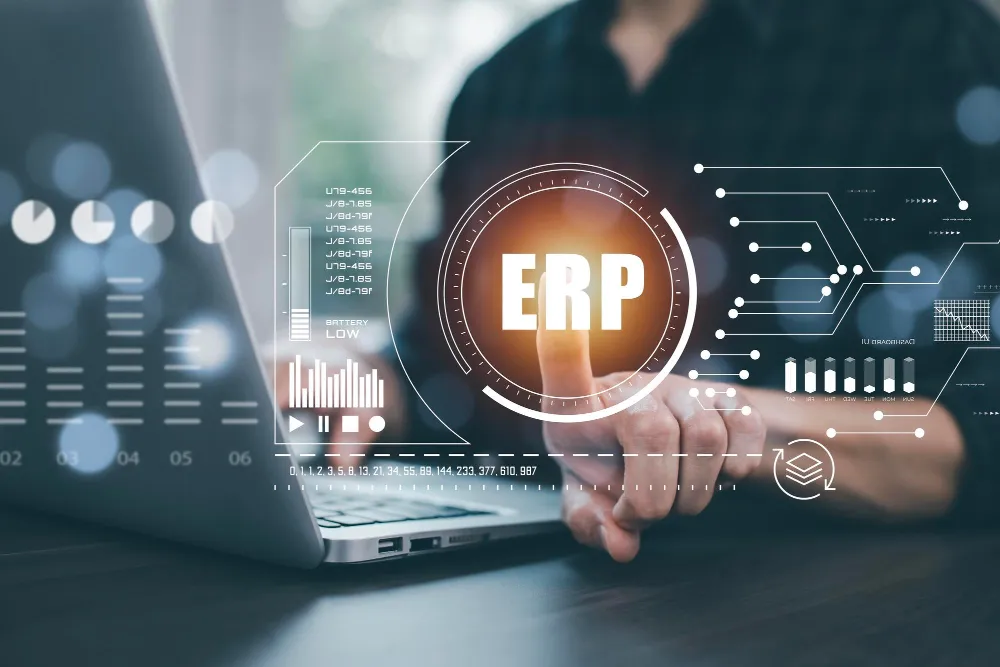






Finance should understand procurement. Procurement should see inventory. Operations should know what is happening in the supply chain. Management should not have to reconcile information across disconnected systems before making a decision.
An enterprise ERP creates a connected operational environment where business functions can share processes, data, approvals and reporting.
Web30 India approaches ERP development around the complete operating model of the organization. We map business processes, define the right modules, design the architecture, integrate existing systems and build workflows that support how teams actually work.
The result is not simply another application. It is a technology foundation for running the business.
Manage general ledger, accounts payable, accounts receivable, expenses, budgeting, financial reporting, taxation and financial controls.
Digitize requisitions, purchase orders, supplier management, approvals, sourcing and procure-to-pay workflows.
Manage products, stock levels, warehouses, transfers, receipts, issues, valuation and inventory movements.
Connect demand planning, procurement, inventory, fulfillment, logistics and supply chain operations.
Support production planning, work orders, bills of materials, material requirements, shop-floor operations, quality and production tracking.
Manage employee records, organizational structures, attendance, leave, payroll integrations, workforce workflows and employee services.
Manage projects, budgets, resources, tasks, costs, timesheets, billing and project performance.
Track organizational assets, ownership, locations, maintenance, depreciation and lifecycle information.
Connect quotations, orders, pricing, customers, fulfillment, invoicing and order-to-cash processes.
Create dashboards, operational reports, management views, KPIs and analytics across connected enterprise data.
Develop a purpose-built ERP platform around specific organizational processes, business rules and reporting requirements.
Start with priority functions and add additional modules as the organization and requirements evolve.
Build cloud-based ERP environments with centralized access, integrations, security controls and scalable infrastructure.
Develop ERP platforms around specialized requirements in manufacturing, healthcare, logistics, retail, education, construction and other industries.
Support multiple companies, subsidiaries, business units, locations and organizational structures within a connected environment.
Manage operations across branches, warehouses, plants, offices and geographically distributed teams.
Modernize legacy ERP applications, interfaces, databases and integrations without losing critical business processes.
Connect ERP systems with specialized applications rather than forcing every business capability into one system.
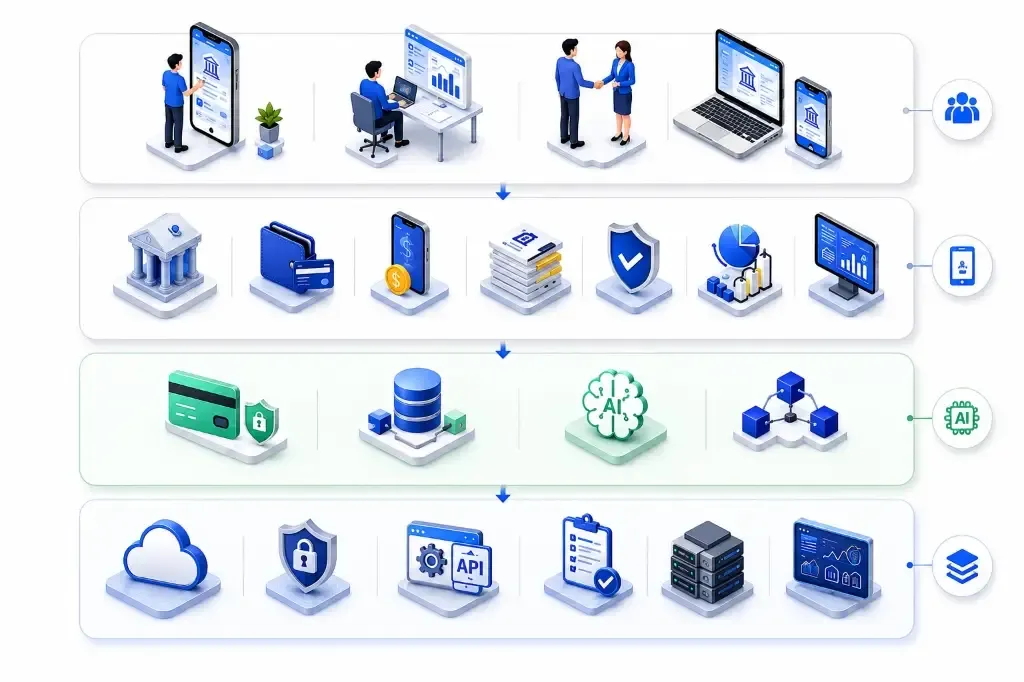
Web portals, employee applications, management dashboards, mobile applications and role-specific workspaces.
ERP modules, business rules, workflows, approvals and operational services.
Connect multi-step processes across finance, procurement, inventory, operations, HR and other departments.
APIs, middleware, webhooks, event-driven communication and third-party connectors.
Transactional databases, master data, reporting data, document storage and enterprise data services.
Business intelligence, forecasting, operational analytics, AI-assisted workflows and decision-support capabilities.
Cloud infrastructure, application hosting, deployment pipelines, monitoring, backup and disaster-recovery architecture.
Structure common records for customers, suppliers, products, employees, assets, locations, accounts and other core business entities.
Configure approvals for procurement, expenses, payments, contracts, master-data changes and other controlled processes.
Give users access to the functions and data appropriate to their responsibilities.
Connect business documents, invoices, purchase orders, contracts, employee records and operational documentation with relevant transactions.
Translate organizational policies into configurable rules for validation, routing, calculations and process execution.
Automate reminders, alerts, approvals, exceptions and workflow escalations.
Maintain relevant records of transactions, approvals, changes and administrative actions.
Bring operational and financial information together for management reporting and performance analysis.

Connect banking platforms, payment gateways, payment processors and financial services.

Synchronize customers, opportunities, orders, service activity and customer information with CRM systems.

Connect online orders, product catalogs, inventory, payments, customers and fulfillment.

Integrate employee information, payroll services, attendance systems and workforce applications.

Connect MES, production systems, machines, IoT platforms, quality systems and operational technologies.

Integrate WMS, TMS, shipping platforms, carriers, tracking systems and warehouse operations.

Connect enterprise data with reporting, visualization, analytics and management intelligence platforms.
Integrate specialized software through APIs, middleware, file exchange, webhooks or event-driven architecture.
Implement authentication, role-based access, permissions, SSO and organizational access controls.
Protect financial transactions, approvals, payment processes and sensitive accounting information.
Apply appropriate controls around customer, employee, supplier, financial and operational data.
Secure APIs, credentials, integrations, webhooks and system-to-system communication.
Protect business logic, workflows, administrative functions and application interfaces.
Secure databases, cloud environments, servers, containers, networks and deployment infrastructure.
Track relevant transactions, approvals, configuration changes and administrative activities.
Monitor system health, errors, access activity and operational events while supporting appropriate backup and recovery strategies.
Understand the organization's departments, workflows, locations, users, systems, data and operational requirements.
Identify the required ERP capabilities, dependencies, integrations and implementation priorities.
Define the application architecture, data model, technology stack, integration strategy, security model and deployment environment.
Configure standard capabilities where appropriate and develop custom modules, workflows and business logic where required.
Prepare master data, migrate required information and connect ERP with existing business systems.
Perform functional, integration, performance, security and user acceptance testing across business processes.
Prepare production infrastructure, complete migration, train users and support the transition into production.
Monitor the ERP environment, resolve operational issues, improve workflows and introduce additional capabilities over time.

Connect workflows across departments instead of managing each function as an isolated system.
Create shared structures for core business information and reduce unnecessary duplication between systems.
Give teams access to current operational and financial information through connected dashboards and reporting.
Automate repetitive data entry, approvals, reconciliations, notifications and workflow steps.
Create structured permissions, approvals, audit trails and process controls around critical operations.
Build an ERP architecture that can evolve with new locations, business units, modules, integrations and operational requirements.
Our blockchain development services have revolutionized industries by offering secure, decentralized solutions that enhance transparency, eliminate intermediaries, and boost operational efficiency.
Production, procurement, inventory, quality, maintenance, finance and supply chain operations.
Products, inventory, purchasing, stores, orders, customers, finance and fulfillment.
Procurement, fleet, warehouse, shipment, inventory, finance and operational management.
Administrative operations, procurement, finance, workforce, assets and healthcare-specific business processes.
Projects, procurement, contractors, resources, costs, billing and project financial management.
Institutional finance, procurement, workforce, assets, student-related operations and administration.
Finance, compliance workflows, procurement, workforce, reporting and internal operations.
Properties, procurement, inventory, workforce, finance, bookings and operational management.
Showcase verified Web30 India ERP, enterprise application, business management or operational software projects.
Explore insights on ERP architecture, ERP modernization, enterprise software, business process automation, ERP integrations, master data, cloud ERP, enterprise analytics, AI in ERP and digital operations.
Everyone has very little or no knowledge about the Metaverse. What does it mean and how does it work? We might not...
Today, smart contracts are beneficial for companies. This in-depth guide goes into great detail about their unique...
Everyone must be aware of how important it is to have a website in order to make a mark in the IT business industry...
Welcome to the next gaming frontier, where virtual worlds collide with reality to create immersive experiences like...
DeFi is an innovative system that will fundamentally change global finance. In summary, DeFi is an open monetary sy...
Everyone has very little or no knowledge about the Metaverse. What does it mean and how does it work? We might not...
Today, smart contracts are beneficial for companies. This in-depth guide goes into great detail about their unique...
Everyone must be aware of how important it is to have a website in order to make a mark in the IT business industry...
Welcome to the next gaming frontier, where virtual worlds collide with reality to create immersive experiences like...
DeFi is an innovative system that will fundamentally change global finance. In summary, DeFi is an open monetary sy...
Where connections are brewed, ideas percolate, and inspiration flows!
Let’s hear about your project. Drop us the details or send us a direct email
 24/7 Support