
10 Best Metaverse Crypto Projects To Watch Out For in 2023
Everyone has very little or no knowledge about the Metaverse. What does it mean and how does it work? We might not...

Build machine learning systems that identify patterns, predict outcomes, classify information and support better decisions.
Web30 India develops machine learning solutions around data preparation, feature engineering, model development, training, evaluation, deployment and continuous monitoring across structured and unstructured data.
Machine learning covers multiple learning approaches and model families. Common applications include supervised learning for classification and regression, unsupervised learning for discovering patterns and groups, and neural-network-based approaches for more complex data and tasks.








A machine learning model is only one part of a production system. Reliable results depend on the quality of the data, feature engineering, training process, evaluation methodology, deployment environment and ongoing monitoring.
Machine learning can support classification, regression, clustering, anomaly detection, recommendation, forecasting and other data-driven tasks. Model selection and evaluation should be based on the problem, available data and the business objective rather than simply choosing the most complex algorithm.
Web30 India builds machine learning systems from data preparation through production deployment, with the architecture designed around the way the model will actually be used.
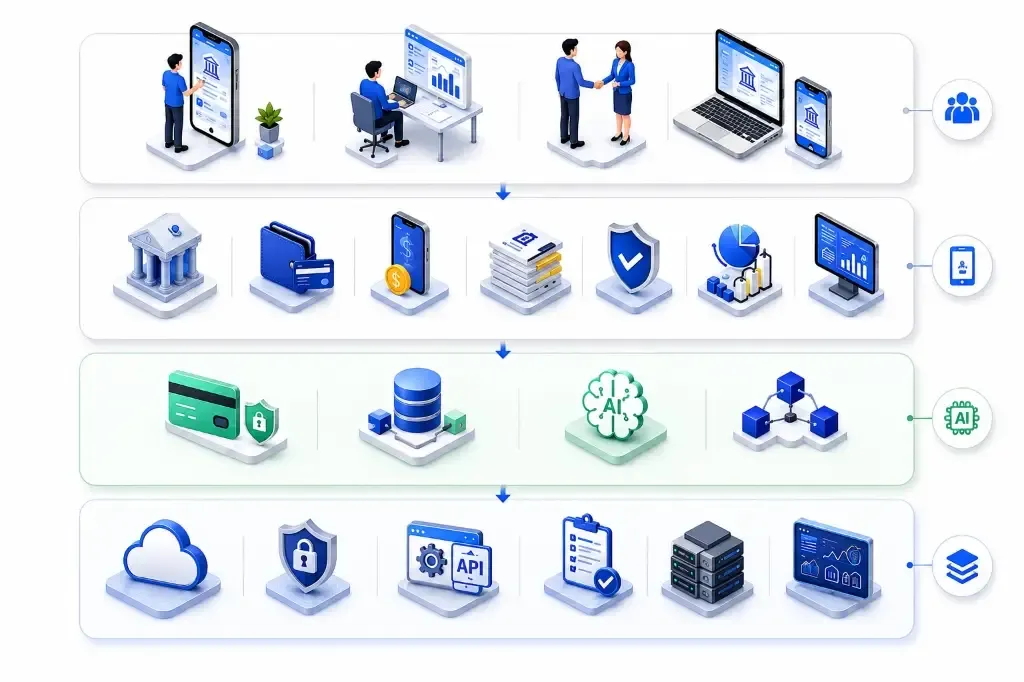
Develop classification and regression models using labeled datasets to predict categories, values and outcomes.
Identify patterns, clusters, relationships and anomalies in datasets where predefined target labels are not available.
Build models that use historical and current data to estimate future outcomes, risks, demand or operational conditions.
Transform raw data into meaningful model features through selection, transformation, encoding, aggregation and other preprocessing techniques.
Develop and train machine learning models using appropriate algorithms, datasets, validation strategies and experiment tracking.
Tune model parameters, compare algorithms and optimize performance against defined evaluation criteria. Scikit-learn, for example, provides model-selection and hyperparameter-tuning capabilities across multiple estimator families.
Deploy trained models through APIs, applications, batch pipelines or integrated production systems.
Build the operational layer required to register, deploy, monitor and retrain models as production data and model behavior change.
Build applications that use historical and current data to generate predictions for business and operational decisions.
Create personalized recommendation engines for products, content, services, learning and other digital experiences
Develop models that identify unusual patterns, suspicious activity and potential risk across transactional and operational data.
Build forecasting systems for sales, inventory, supply chains, workforce planning and other demand-driven operations
Use machine learning to understand customer behavior, segmentation, churn risk, engagement and conversion patterns.
Identify unusual behavior in transactions, machines, systems, networks, processes or operational data.
Combine machine learning predictions with business rules, workflows and application interfaces to support operational decisions.
Build reusable ML infrastructure for data pipelines, model training, deployment, monitoring and multiple business applications.
A production machine learning architecture connects data engineering, model development and application infrastructure. The lifecycle typically moves through data preparation, training, evaluation, model registration, deployment and ongoing monitoring.
Model evaluation can use different metrics and validation strategies depending on whether the task involves classification, regression or another learning problem.
LLMs have broad pretrained knowledge, but enterprise applications often need access to private, changing or domain-specific information. RAG retrieves relevant information from an external knowledge source and provides it to the model as context.
Connect documents, databases, knowledge bases and approved information sources.
Clean, normalize, classify and divide source information into retrieval-ready content.
Create numerical representations that allow content to be searched based on semantic similarity.
Use vector, keyword or hybrid search to identify relevant information for each request.
Combine retrieved information with system instructions, conversation history and application rules.
Send the structured context to the selected language model to generate the response.
Measure groundedness, relevance, completeness and correctness to improve the retrieval and generation pipeline.
A machine learning project does not end when a model achieves a good evaluation score. Production systems need repeatable training, model versioning, deployment controls and monitoring. A modern ML lifecycle commonly includes scoping, data preparation, training, evaluation, registration, deployment, monitoring and retraining.

Track datasets, features, experiments and model configurations across development cycles.

Maintain controlled versions of trained models and their associated metadata.

Automate model packaging, testing, staging and production deployment.

Serve predictions through APIs, batch processing or embedded application workflows.

Monitor prediction behavior, input data and production performance.

Identify changes in production data or model behavior that may require investigation or retraining.
Create controlled processes for updating models as new data becomes available.
Control who can access datasets, features, training environments and prediction outputs.
Protect sensitive information throughout ingestion, storage, training and inference.
Control access to trained models, model artifacts, endpoints and deployment infrastructure.
Validate data transformations and feature pipelines so unexpected changes do not silently affect model behavior.
Apply business rules and validation around model outputs before they influence downstream workflows
Track model versions, predictions, deployments, data changes and relevant operational events.
Identify suspicious transactions, assess risk and support financial decision workflows.
Predict demand, personalize experiences, recommend products and identify customer behavior patterns.
Predict equipment failures, identify production anomalies and support quality inspection.
Support risk prediction, patient analytics, operational forecasting and other controlled healthcare applications.
Forecast demand, optimize operations, estimate delivery conditions and identify supply chain anomalies.
Build credit risk models, fraud detection systems, customer intelligence and forecasting applications.
Personalize content discovery, understand audiences and predict engagement patterns.
Support demand forecasting, customer segmentation, recommendations and operational intelligence.
Connect data warehouses, databases, data lakes and operational data systems.
Integrate CRM, ERP, HRMS, finance, commerce and operational platforms.
Process sensor and telemetry data for monitoring, prediction, anomaly detection and maintenance applications.
Connect machine learning outputs with dashboards, reporting systems and business intelligence platforms.
Deploy training and inference workloads across AWS, Microsoft Azure and Google Cloud environments.
Expose trained models through APIs and application services for real-time or workflow-based predictions.
Bring together relevant historical, transactional, operational or real-time data.
Clean, transform, validate and structure the data for model development.
Create meaningful model features and select the information most relevant to the learning problem.
Train candidate models using appropriate datasets, algorithms and experiment configurations.
Compare models using appropriate metrics, validation methods and business requirements.
Deploy the selected model, monitor production behavior and establish processes for maintenance and retraining.

Define the business problem, prediction objective, available data, constraints and expected outcome.
Evaluate data quality, completeness, structure, availability and suitability for the proposed model.
Design the feature pipeline and identify suitable algorithms and modeling approaches.
Train candidate models, track experiments and compare alternative approaches.
Evaluate models against defined metrics and validate their behavior using appropriate test data.
Connect the selected model with APIs, applications, workflows and enterprise systems.
Deploy the model through real-time APIs, batch inference or other suitable production architecture.
Monitor data, predictions and model performance, then retrain or optimize when production conditions change.







Explore practical insights on machine learning architecture, predictive modeling, feature engineering, model evaluation, MLOps, model deployment, forecasting, anomaly detection and production machine learning.
Everyone has very little or no knowledge about the Metaverse. What does it mean and how does it work? We might not...
Today, smart contracts are beneficial for companies. This in-depth guide goes into great detail about their unique...
Everyone must be aware of how important it is to have a website in order to make a mark in the IT business industry...
Welcome to the next gaming frontier, where virtual worlds collide with reality to create immersive experiences like...
DeFi is an innovative system that will fundamentally change global finance. In summary, DeFi is an open monetary sy...
Everyone has very little or no knowledge about the Metaverse. What does it mean and how does it work? We might not...
Today, smart contracts are beneficial for companies. This in-depth guide goes into great detail about their unique...
Everyone must be aware of how important it is to have a website in order to make a mark in the IT business industry...
Welcome to the next gaming frontier, where virtual worlds collide with reality to create immersive experiences like...
DeFi is an innovative system that will fundamentally change global finance. In summary, DeFi is an open monetary sy...
Everything you need to know about our enterprise blockchain engineering process, costs, security, and architectures.
Where connections are brewed, ideas percolate, and inspiration flows!
Let’s hear about your project. Drop us the details or send us a direct email
 24/7 Support