
10 Best Metaverse Crypto Projects To Watch Out For in 2023
Everyone has very little or no knowledge about the Metaverse. What does it mean and how does it work? We might not...

Identify vulnerabilities, logic flaws and security risks before your smart contracts reach production. Our smart contract audit services combine automated analysis, manual code review and business-logic assessment to evaluate contract security across DeFi, tokens, NFTs, DAOs and Web3 applications.







Smart contracts often manage assets, permissions, governance decisions and irreversible transactions. A small coding mistake or overlooked business rule can create serious consequences once a contract is deployed.
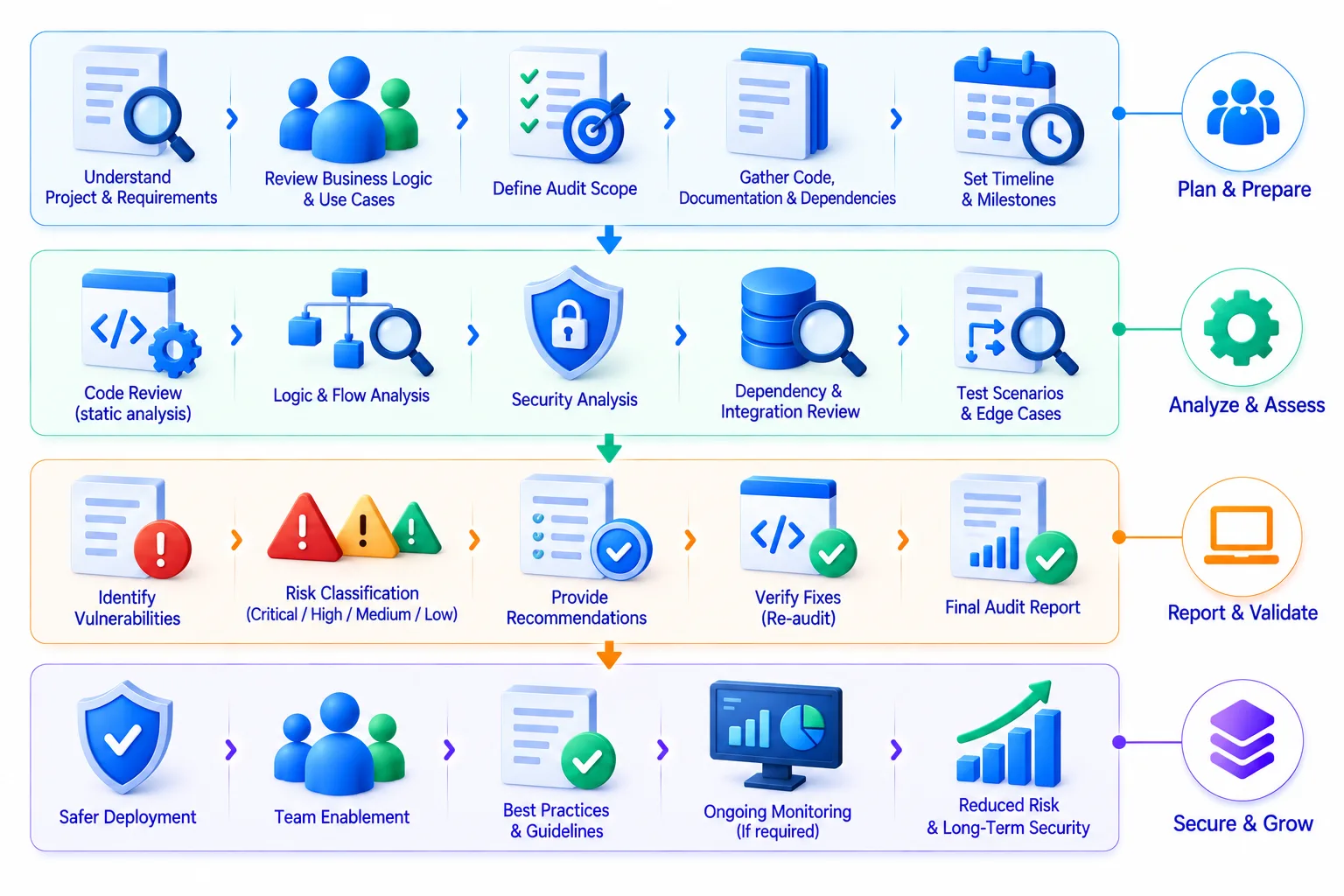
Our audit process examines the contract at both the code and business-logic level. We review how functions interact, how permissions are enforced, how assets move, how external dependencies are handled and how the contract behaves under unexpected conditions.
The objective is not simply to identify coding issues. It is to give your development team a clear understanding of the risks, their severity and the changes required before production deployment.
16+
Years of Exp.
1200+
Successful Projects
34+
Countries Served
200+
Experts
We examine contract code, architecture and execution logic to identify vulnerabilities that automated tools alone may not detect.
Review contract source code for coding issues, unsafe patterns and implementation weaknesses.
Use security analysis tools to identify known vulnerability patterns and suspicious code behavior.
Conduct detailed line-by-line and function-level analysis to uncover issues requiring human reasoning.
Assess whether contract behavior correctly implements the intended business rules and user flows.
Examine ownership, roles, permissions and privileged functions for improper authorization.
Review external calls, state changes and execution paths for reentrancy-related risks.
Assess calculations, input handling, boundary conditions and unsafe assumptions.
Analyze reliance on price feeds, external contracts, callbacks and other dependencies.
Assess proxy patterns, upgrade permissions, initialization logic and storage-related risks.
Identify inefficient operations and execution patterns that may increase transaction costs or create operational concerns.
Analyze token transfers, fees, rewards, staking, vesting and other economic mechanisms for unexpected behavior.
Validate fixes after vulnerabilities are addressed and confirm whether reported issues have been resolved.
Audit depth and focus areas vary according to the contract's purpose, architecture and asset exposure.
Review lending, staking, liquidity, yield and financial protocol logic.
Assess token issuance, transfers, permissions, supply controls and administrative functions.
Review minting, ownership, metadata, royalty and marketplace-related logic.
Evaluate voting, proposal execution, governance permissions and treasury-related contracts.
Analyze staking deposits, reward calculations, withdrawal mechanisms and timing logic
Review allocation schedules, beneficiary controls, release conditions and token distribution logic.
Assess listings, purchases, payments, fees, ownership transfers and settlement logic.
Conduct broader reviews across interconnected contracts forming a decentralized financial protocol.
A strong audit looks beyond isolated functions. We examine the contract as part of the wider system, including users, privileged roles, external contracts, tokens and transaction flows.

Review ownership, roles and privileged operations.

Analyze how contract state changes across functions and execution paths.

Review interactions with external contracts, callbacks and dependencies.

Trace how tokens and other digital assets enter, move through and leave the contract.

Test whether implemented behavior matches the intended protocol rules.

Review proxy architecture, upgrade authority and initialization mechanisms.

Assess incentives, fees, rewards and token-related calculations.

Consider unexpected inputs, edge cases and abnormal execution conditions.
Understand the contract's purpose, architecture, dependencies and deployment environment.
Examine the codebase, technical documentation and intended contract behavior.
Run static analysis and security tooling to identify known vulnerability patterns.
Inspect functions, state transitions, permissions and execution paths in detail.
Test whether the implementation behaves correctly under expected and unexpected scenarios.
Document findings with severity, affected components, technical explanation and recommended remediation.
Work with the development team to clarify findings and review proposed fixes.
Review implemented fixes, validate remediation and provide the final audit assessment.
We audit contracts across applications where code controls assets, permissions, transactions and digital ownership.
Audit financial contracts managing lending, staking, liquidity and asset flows.
Review token contracts and associated distribution mechanisms.
Assess contracts governing minting, ownership and marketplace interactions.
Review voting, proposal and treasury execution mechanisms.
Assess contracts controlling game assets, rewards and player economies.
Review contracts supporting tokenized assets and ownership structures.
Evaluate blockchain-based payment and settlement logic.
Review contracts supporting traceability, verification and automated business processes.
Assess business-critical contracts integrated with enterprise systems.
Review contracts powering decentralized applications and digital ecosystems.
An audit report should help developers understand exactly what needs attention. We structure findings around severity, affected code, technical impact, reproduction context and recommended remediation.
High-level overview of the audit scope and major findings.
Categorization of identified issues based on potential impact and exploitability.
Detailed explanation of vulnerabilities and affected contract components.
Context around how an issue could affect assets, users or protocol behavior.
Practical guidance for addressing identified vulnerabilities.
Confirmation of which findings were addressed and which require further attention.
An independent contract review gives your team another layer of technical scrutiny before users and assets depend on the deployed code.

Identify security weaknesses before they reach production.
Give development teams an independent assessment of contract quality and security.
Address critical findings before contracts become part of live transaction flows.
Help developers focus on the issues that matter most through structured severity and recommendations.
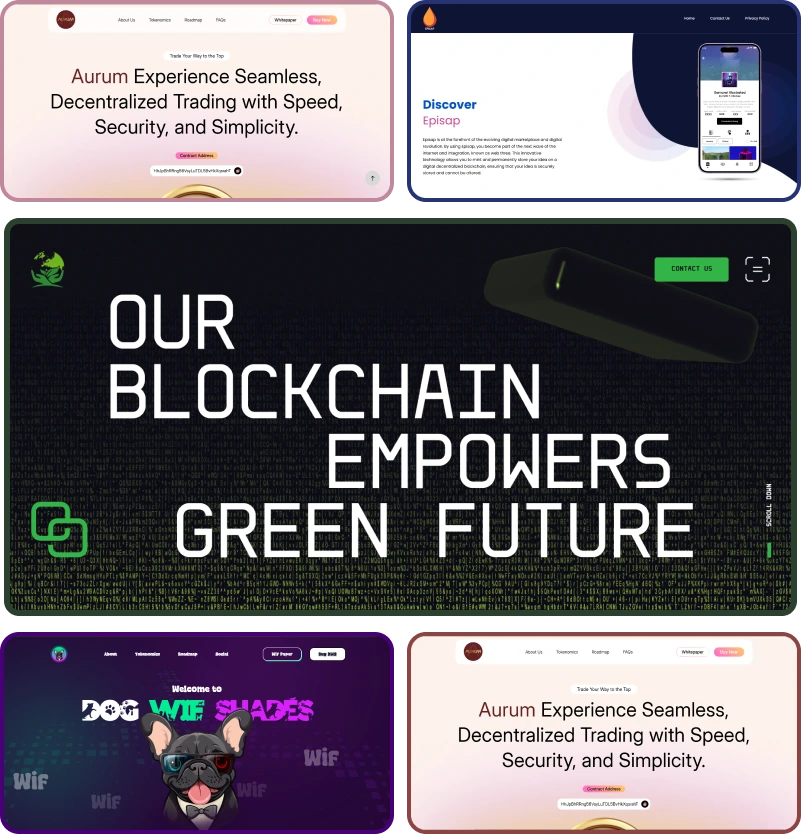
Explore selected blockchain security projects demonstrating our approach to contract analysis, vulnerability assessment and remediation.
Stay informed with expert analysis, technical deep-dives, and Web3 market trends.
Everyone has very little or no knowledge about the Metaverse. What does it mean and how does it work? We might not...
Today, smart contracts are beneficial for companies. This in-depth guide goes into great detail about their unique...
Everyone must be aware of how important it is to have a website in order to make a mark in the IT business industry...
Welcome to the next gaming frontier, where virtual worlds collide with reality to create immersive experiences like...
DeFi is an innovative system that will fundamentally change global finance. In summary, DeFi is an open monetary sy...
Everyone has very little or no knowledge about the Metaverse. What does it mean and how does it work? We might not...
Today, smart contracts are beneficial for companies. This in-depth guide goes into great detail about their unique...
Everyone must be aware of how important it is to have a website in order to make a mark in the IT business industry...
Welcome to the next gaming frontier, where virtual worlds collide with reality to create immersive experiences like...
DeFi is an innovative system that will fundamentally change global finance. In summary, DeFi is an open monetary sy...
Where connections are brewed, ideas percolate, and inspiration flows!
Let’s hear about your project. Drop us the details or send us a direct email
 24/7 Support