
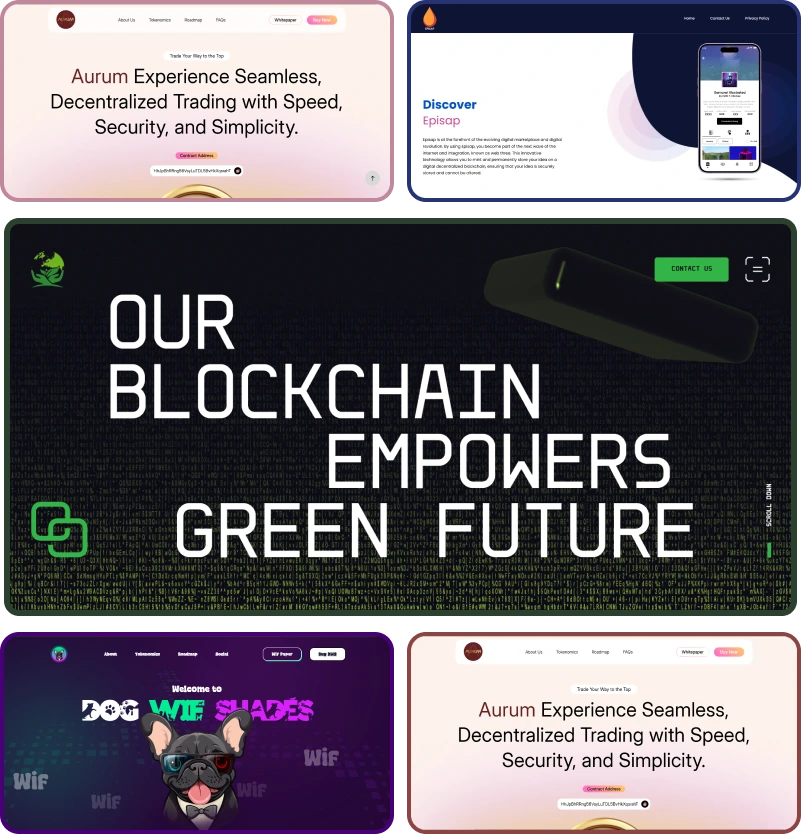
10 Best Metaverse Crypto Projects To Watch Out For in 2023
Everyone has very little or no knowledge about the Metaverse. What does it mean and how does it work? We might not...

Build machine learning systems that learn from your data and support real business decisions. We develop custom ML models for classification, recommendation, anomaly detection, forecasting, scoring and intelligent automation, with the data pipelines, APIs and deployment infrastructure needed for production use.







Machine learning becomes valuable when models are trained around a clearly defined business problem and reliable data. We work across data preparation, feature engineering, model development, evaluation and deployment to create ML systems that can identify patterns and produce useful outcomes.
From customer behavior and fraud detection to recommendations, classification and operational optimization, we develop models around the decisions your business needs to make.
16+
Years of Exp.
1200+
Successful Projects
34+
Countries Served
200+
Experts
Our AI agent development capabilities cover the intelligence, tools, memory, orchestration and integrations required to build useful agent-based systems.
Define the right machine learning approach based on the business problem, available data and expected outcome.
Develop models tailored to specific classification, prediction, recommendation, detection and optimization requirements.
Transform raw business data into structured datasets and meaningful features suitable for model training.
Develop models for classification, regression, scoring and other problems where historical labelled data is available.
Identify patterns, clusters and relationships in data without relying on predefined labels.
Build recommendation systems that learn from user behavior, product information and historical interactions.
Identify unusual transactions, behaviors, operational events or data patterns that may require attention.
Develop models that categorize customers, transactions, documents, products or other business data.
Train and refine models while evaluating performance against relevant business and technical metrics.
Expose trained models through APIs so they can be integrated into websites, applications and enterprise systems.
Test models against appropriate datasets and metrics to understand accuracy, consistency and real-world performance.
Deploy models into production environments and establish monitoring and improvement processes as new data becomes available.
Personalize products, services, content or actions based on customer behavior and historical interactions.
Identify unusual transaction patterns and assign risk scores to help financial and business teams investigate potential fraud.
EGroup customers based on behavioral, transactional or demographic patterns to support targeted business strategies.
Use historical data and relevant business signals to estimate future demand and support planning decisions.
Identify patterns that may indicate equipment or machinery issues before they lead to costly operational interruptions.
Evaluate customers, transactions or business events using historical patterns and defined risk factors.
Automatically categorize documents, transactions, products, customers and other business information.
Monitor large datasets and operational activity to identify unusual behavior or deviations from expected patterns.
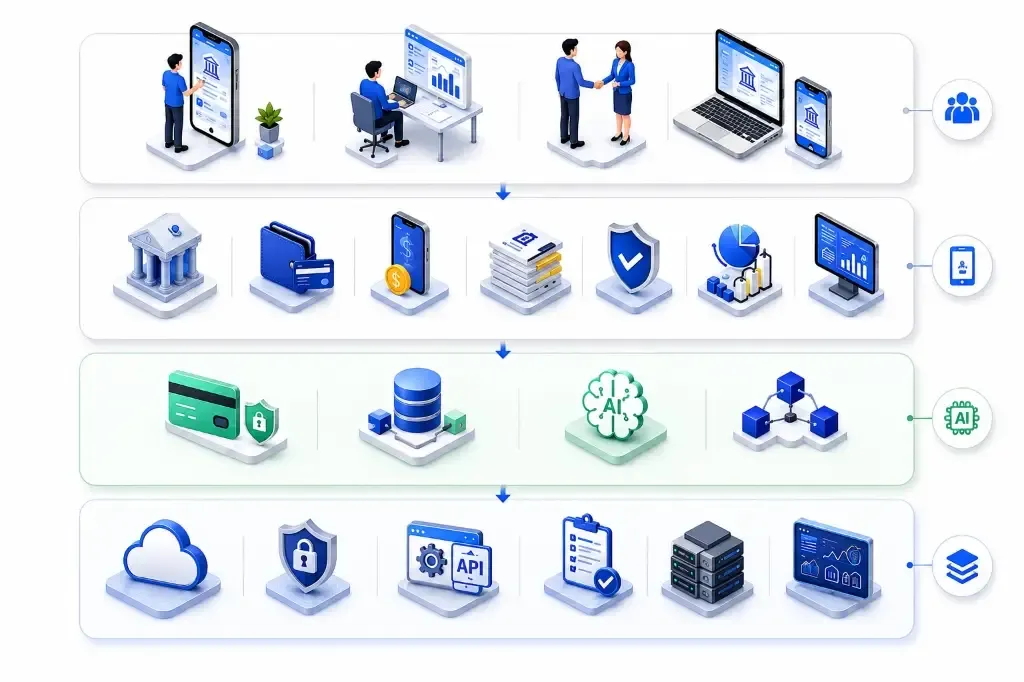
The model is only one part of a production machine learning system. Reliable results depend on how data is collected, prepared, transformed, used for training and delivered to the model during production.
We design ML architectures around the complete lifecycle from data ingestion to model serving and monitoring.
Databases, data warehouses, files, APIs and operational systems.
Data cleaning, transformation, preparation and validation.
Feature engineering, feature storage and reusable model inputs.
Training, experimentation, model selection and optimization.
Validation datasets, performance metrics and model comparison.
Model APIs, inference services and application integration.
Model performance, data drift, operational monitoring and retraining signals.
Execution tracking, error monitoring, output evaluation and performance analysis.

A model that performs well during development may behave differently when exposed to new data. We build evaluation and monitoring into the ML lifecycle so teams can understand model performance and identify when models need improvement or retraining.
Our blockchain development services have revolutionized industries by offering secure, decentralized solutions that enhance transparency, eliminate intermediaries, and boost operational efficiency.
Agents can support research, customer operations, document workflows, internal knowledge and controlled financial processes.
Support administrative workflows, research, documentation and information retrieval while keeping appropriate human controls in place.
Automate parts of claims workflows, document processing, policy research and customer operations.
Build agents for customer support, product research, order workflows, merchandising and commerce operations.
Support procurement, operational documentation, maintenance workflows, supplier communication and internal knowledge access.
Coordinate information across logistics systems, documentation, shipment workflows and operational processes.
Assist with property research, document processing, lead management, communication and transaction workflows.
Support research, content workflows, production coordination and media operations.
Build agents for research assistance, administrative workflows, learning support and knowledge access.
Support document-heavy processes, information retrieval, administrative workflows and citizen service operations.
Define the decision, process or business outcome the machine learning system needs to support.
Review available datasets, data quality, volume, structure and potential limitations.
Determine whether machine learning is appropriate and identify the most suitable modelling approach.
Prepare training data and develop meaningful features for the selected model.
Build, train and compare models against appropriate evaluation criteria.
Test model behavior using validation data and relevant business and technical metrics.
Deploy the selected model through APIs, applications or ML infrastructure.
Track model behavior, data changes and performance to identify opportunities for retraining and optimization.

Use learned patterns from historical and operational data to support business decisions.
Automate classification, scoring, detection and other repetitive analytical processes.
Use customer and behavioral data to deliver more relevant recommendations and interactions.
Identify unusual patterns and potential risks before they become larger operational problems.
Explore selected ML projects covering recommendation systems, classification, anomaly detection, forecasting and data-driven business applications.
Practical insights on machine learning models, data preparation, feature engineering, model evaluation, deployment, monitoring and enterprise ML implementation.
Everyone has very little or no knowledge about the Metaverse. What does it mean and how does it work? We might not...
Today, smart contracts are beneficial for companies. This in-depth guide goes into great detail about their unique...
Everyone must be aware of how important it is to have a website in order to make a mark in the IT business industry...
Welcome to the next gaming frontier, where virtual worlds collide with reality to create immersive experiences like...
DeFi is an innovative system that will fundamentally change global finance. In summary, DeFi is an open monetary sy...
Everyone has very little or no knowledge about the Metaverse. What does it mean and how does it work? We might not...
Today, smart contracts are beneficial for companies. This in-depth guide goes into great detail about their unique...
Everyone must be aware of how important it is to have a website in order to make a mark in the IT business industry...
Welcome to the next gaming frontier, where virtual worlds collide with reality to create immersive experiences like...
DeFi is an innovative system that will fundamentally change global finance. In summary, DeFi is an open monetary sy...
Where connections are brewed, ideas percolate, and inspiration flows!
Let’s hear about your project. Drop us the details or send us a direct email
 24/7 Support